From West Nile virus risk to the species mix in Chicago parks and lakefront yards, here's the complete guide to mosquitoes in the city — and how to protect your home.
Chicago summers are short, beautiful, and — for anyone who's ever tried to enjoy a backyard at dusk — full of mosquitoes. Lake Michigan, the Cook County Forest Preserves, hundreds of acres of city parks, and dense vintage housing with countless water-holding nooks combine to give Chicago one of the heavier mosquito loads in the Midwest. Here's the full picture residents should understand before they spend another July hiding indoors.
Types of mosquitoes in Chicago
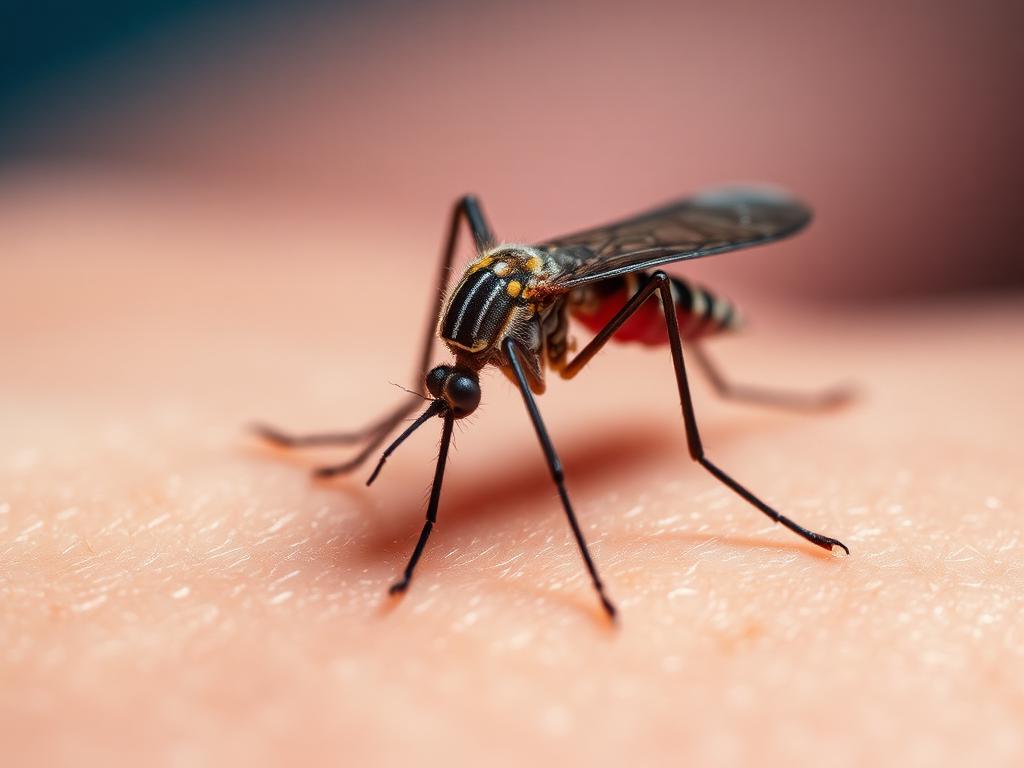
Chicago hosts more than a dozen mosquito species, but three account for almost all yard biting and disease transmission: the northern house mosquito (Culex pipiens), the inland floodwater mosquito (Aedes vexans), and the Asian tiger mosquito (Aedes albopictus), which has been expanding in Cook County over the last several years.
Culex pipiens is the primary West Nile virus vector — it breeds in catch basins and stagnant standing water, bites at dusk and after dark, and is the dominant species in dense urban neighborhoods. Aedes vexans is the aggressive daytime biter that floods yards after heavy rain. Aedes albopictus is a small black-and-white striped species that bites all day, breeds in tiny containers (bottle caps, plant saucers), and is increasingly common in city neighborhoods.
West Nile virus risk in Chicago
Cook County reports human West Nile cases nearly every year, with risk concentrated from late July through early September. Most infections produce mild flu-like symptoms or none at all, but a small percentage develop into severe neuroinvasive disease. Older adults and people with compromised immune systems are at higher risk.
Chicago monitors mosquito populations and West Nile activity throughout the season via the Chicago Department of Public Health and the local mosquito abatement districts. Treating your own yard meaningfully reduces personal exposure — especially during evening hours when Culex are most active.
Why Chicago parks and the lakefront create high mosquito pressure
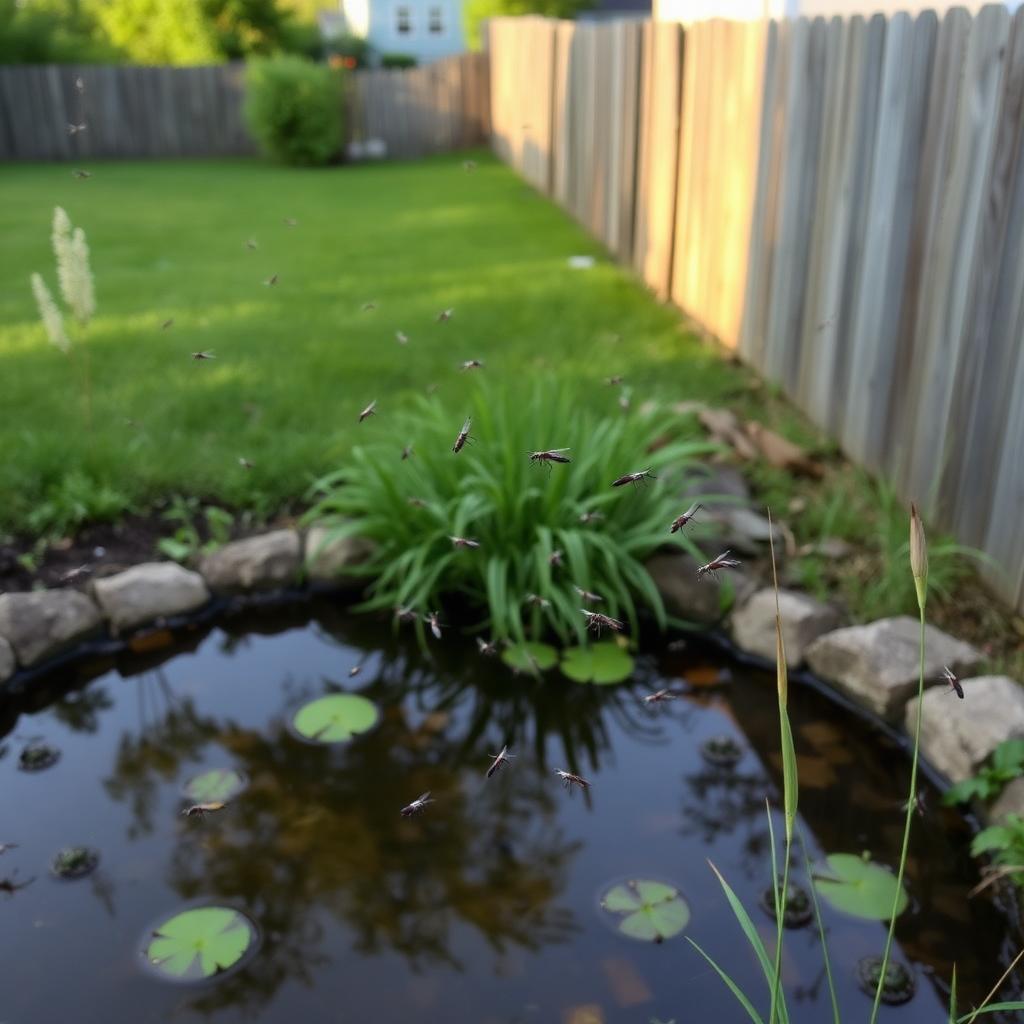
Mosquitoes need three things: standing water for larvae, shaded humid resting habitat for adults, and a blood meal source. Chicago's lakefront parks, lagoons, and river corridor provide all three at scale. If your property is within a few blocks of Lincoln Park, Humboldt Park, Washington Park, Garfield Park, Marquette Park, or the Lakefront Trail, you'll see meaningfully higher pressure than someone in a dense interior block.
Suburban properties along the North Shore (Evanston, Wilmette, Winnetka) and anywhere bordering the Cook County Forest Preserves face the same dynamic from mature canopy cover and woodland water sources.
Best prevention strategies and when DIY isn't enough
Eliminate standing water on your property at least weekly — gutters, plant saucers, kiddie pools, birdbaths, tarp folds, tire ruts, anything that holds water for more than four days. Use BTI dunks in any water feature you can't drain. Run fans on patios (mosquitoes are weak fliers). Wear long sleeves and EPA-registered repellent during peak biting hours.
DIY breaks down when neighboring properties or nearby parks are the source. You can have a pristine yard and still get swarmed if the lot next door has a clogged gutter or the park down the block has a stagnant lagoon. That's when a professional barrier treatment becomes worth it — you treat the adult mosquito resting habitat on your property and stop them before they reach the patio.
Sleep Tight's comprehensive mosquito program
Our seasonal program runs May through October with treatments every 21 days, free retreatment between visits if pressure spikes, and a free yard inspection on every visit to find and eliminate hidden breeding sites. We also offer one-time event treatments timed 24-48 hours before a graduation, wedding, or backyard party.
Need pest control in Chicago or the surrounding suburbs? Sleep Tight Pest Control offers same-day service citywide. Call (773) 240-5932 or get a free quote online at sleeptightpestcontrol.com.
Why this matters for Chicago homes and apartments
Chicago's pest pressure is unusual for a major American city. The combination of a 100-year-plus housing stock, dense alley-based garbage collection, lake-effect humidity from May through September, and a freeze-thaw cycle that opens new foundation cracks every winter creates year-round opportunity for pests that would be seasonal almost anywhere else. Bed bugs and German cockroaches stay active inside heated buildings through January. Norway rats expand burrow networks under garages and gangways the moment ground temperatures crack 40°F. Mosquitoes breed in any standing water within a quarter-mile radius. The result is that the same pest problem in Chicago needs a different response than the playbook a national chain runs in a Sun Belt suburb.
That is why Sleep Tight built its service model around Chicago specifically: same-day appointment availability across all 77 community areas, licensed technicians who know the difference between a Greystone basement and a four-plus-one wall void, transparent flat-rate pricing instead of national-chain upsell scripts, and aftercare that accounts for shared-wall and shared-alley re-introduction risks.
What to do if you are seeing this problem right now
First, do not start spraying over-the-counter products. Foggers, bug bombs, and most consumer aerosols scatter the population deeper into wall voids, baseboards, and adjacent units, which makes the eventual professional treatment harder and more expensive. Second, document what you are seeing — photos of the pest, the location, droppings, damage, or bites — so a technician can confirm species and severity over the phone before the visit. Third, if you rent, notify your landlord or property manager in writing the same day; Chicago's Residential Landlord and Tenant Ordinance (RLTO) protects tenants who report infestations in good faith and obligates the landlord to coordinate professional treatment in nearly every case.
- Bag bedding, soft goods, and any items near the activity in sealed plastic — do not move them to another room.
- Keep sleeping in the affected room if bed bugs are suspected; moving rooms starts a second infestation.
- For rodents, do not seal up burrows or holes before treatment — exclusion happens after the population is knocked down.
- For mosquitoes, walk the perimeter and empty every container holding standing water; even a bottle cap can breed dozens.
- Call (773) 240-5932 for a same-day inspection — most Chicago neighborhoods can be on the schedule within four hours.
Related Sleep Tight resources
Sleep Tight Pest Control publishes a deep library of Chicago-specific guides covering bed bugs, rodents, cockroaches, mosquitoes, ants, and commercial pest control. Each guide is written by our technicians and reflects exactly what we see in the field across the city's neighborhoods.
- [Complete Chicago Pest Control Guide](/chicago-pest-control-guide) — neighborhood-by-neighborhood pest pressure overview.
- [Bed bug heat treatment](/services/bed-bug-heat-treatment) — one-day chemical-free bed bug elimination for Chicago apartments and homes.
- [Rodent control](/services/rodent-control) — exterior baiting, interior trapping, and exclusion for Chicago's rat and mouse pressure.
- [Emergency pest control](/services/emergency-pest-control) — same-day service for active infestations citywide.
- [Pest library](/pest-library) — searchable identification guide with photos for the 30+ pests common in Chicago.
Related Sleep Tight pages
Pest control in neighborhoods mentioned in this article
Frequently Asked Questions
When is West Nile virus risk highest in Chicago?
Late July through early September. Cook County reports human cases nearly every year, with most infections producing mild symptoms but a small percentage developing into severe disease, especially in older adults.
Why are there so many mosquitoes near Chicago parks?
Parks combine the three things mosquitoes need: standing water (lagoons, drainage), shaded resting habitat (mature trees, dense shrubs), and human blood meal sources. Properties within a few blocks of major parks see meaningfully higher pressure.
Do mosquito barrier treatments really work?
Yes. A professional barrier treatment typically reduces adult yard populations by 85-90% for 21-30 days by targeting the shaded resting habitat adult mosquitoes use during the day.
Can Sleep Tight treat my Chicago yard today for mosquitoes?
Yes. Same-day mosquito barrier treatment is available throughout Chicago and the suburbs. Call (773) 240-5932 before noon for same-day availability.
Need pest control in Chicago?
Sleep Tight Pest Control offers same-day service across all Chicago neighborhoods and suburbs including Evanston, Skokie, Niles, and Oak Park. Call (773) 240-5932 or get a free quote online.