Chicago's mosquito season runs from May through September. Here's when peak activity hits, what attracts mosquitoes to your yard, and how Sleep Tight's barrier treatment program keeps your outdoor space usable.
Chicago's lakefront summers are one of the city's great pleasures — until mosquitoes turn your backyard barbecue into a retreat indoors. Here's what to expect from the 2026 mosquito season in Chicago, when activity peaks, and how to keep your yard comfortable without drowning yourself in repellent.
When mosquito season starts and ends in Chicago
Mosquito season in Chicago typically begins in late April or early May, when overnight temperatures consistently stay above 50°F. Activity builds through June, peaks in July and August, and tapers off after the first sustained frost — usually mid to late October. The 2025-2026 winter was mild, which means overwintering mosquito populations are likely higher than average, and the season may start slightly earlier.
The Chicago Department of Public Health tracks West Nile virus activity closely, and 2026 is expected to follow the typical pattern: highest risk in August and September when Culex mosquitoes are most active.
What attracts mosquitoes to your yard
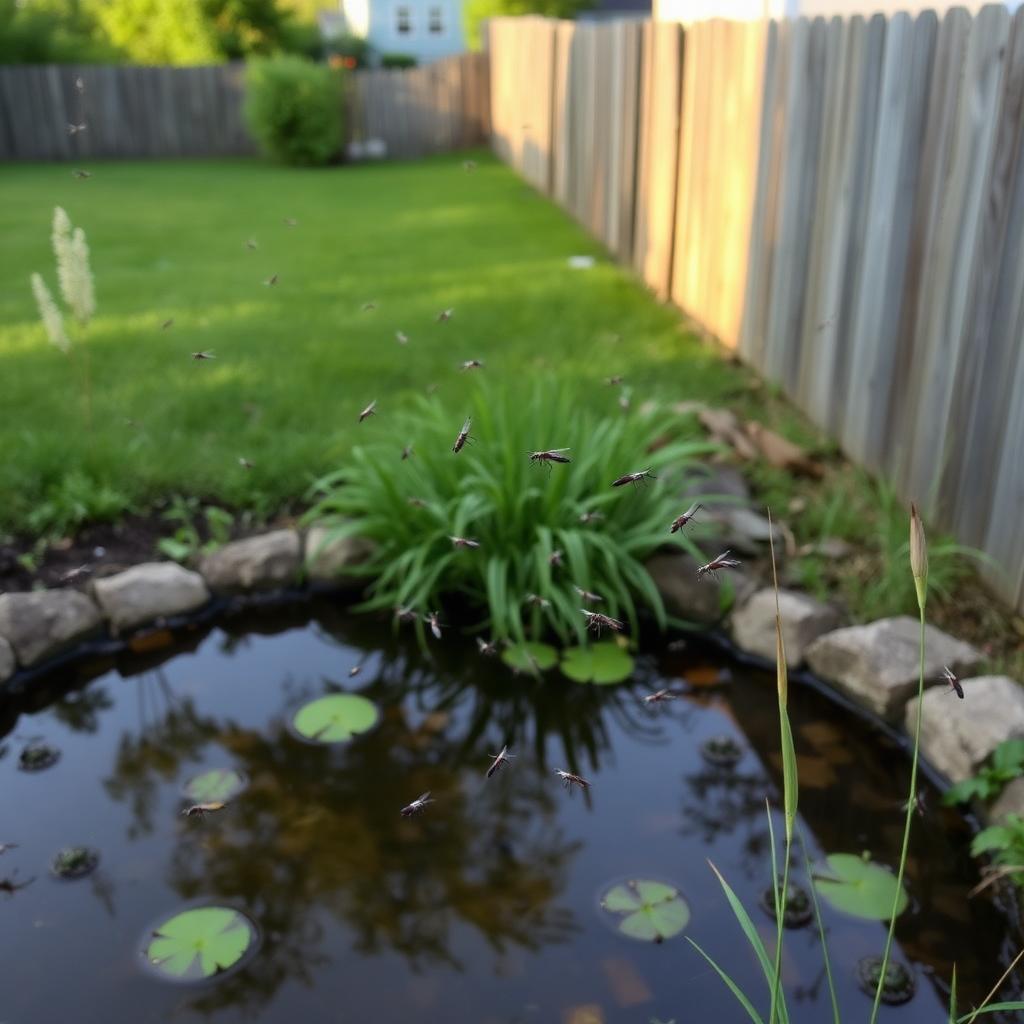
Mosquitoes need standing water to breed, and it doesn't take much. A bottle cap's worth is enough for some species. Common breeding sites in Chicago backyards include: clogged gutters, bird baths and flower pot saucers, kiddie pools and uncovered trash cans, low spots in lawns that hold rainwater after storms, and catch basins near alleys.
Adult mosquitoes rest in cool, shaded, humid areas during the day — dense shrubs, ivy on fences, unkempt ground cover, and under decks. If your yard has both standing water and shade, you're hosting a mosquito factory.
DIY steps that actually help
Before calling a professional, eliminate breeding sites: dump standing water weekly, clean gutters, trim dense vegetation, and repair screens. These steps reduce mosquito pressure but rarely eliminate it completely — especially in Chicago neighborhoods near the lake, rivers, or lagoons where mosquitoes migrate from public land.
- Dump standing water at least once per week
- Clean gutters and downspouts
- Trim dense shrubs and ground cover
- Repair torn window and door screens
- Use fans on patios — mosquitoes are weak fliers
How Sleep Tight's barrier treatment works
Our mosquito barrier treatment targets adult mosquitoes where they rest — on the underside of leaves, in shrubs, along fences, and under decks. We apply a microencapsulated product that adheres to vegetation and continues working for three to four weeks between visits. The treatment reduces biting activity within 24 hours and keeps your yard usable for summer evenings.
We also identify and treat breeding sites on your property, and we offer seasonal plans that cover the full Chicago mosquito season — May through September — at a fixed monthly rate. If mosquitoes are still biting between scheduled visits, we re-treat for free.
Why this matters for Chicago homes and apartments
Chicago's pest pressure is unusual for a major American city. The combination of a 100-year-plus housing stock, dense alley-based garbage collection, lake-effect humidity from May through September, and a freeze-thaw cycle that opens new foundation cracks every winter creates year-round opportunity for pests that would be seasonal almost anywhere else. Bed bugs and German cockroaches stay active inside heated buildings through January. Norway rats expand burrow networks under garages and gangways the moment ground temperatures crack 40°F. Mosquitoes breed in any standing water within a quarter-mile radius. The result is that the same pest problem in Chicago needs a different response than the playbook a national chain runs in a Sun Belt suburb.
That is why Sleep Tight built its service model around Chicago specifically: same-day appointment availability across all 77 community areas, licensed technicians who know the difference between a Greystone basement and a four-plus-one wall void, transparent flat-rate pricing instead of national-chain upsell scripts, and aftercare that accounts for shared-wall and shared-alley re-introduction risks.
What to do if you are seeing this problem right now
First, do not start spraying over-the-counter products. Foggers, bug bombs, and most consumer aerosols scatter the population deeper into wall voids, baseboards, and adjacent units, which makes the eventual professional treatment harder and more expensive. Second, document what you are seeing — photos of the pest, the location, droppings, damage, or bites — so a technician can confirm species and severity over the phone before the visit. Third, if you rent, notify your landlord or property manager in writing the same day; Chicago's Residential Landlord and Tenant Ordinance (RLTO) protects tenants who report infestations in good faith and obligates the landlord to coordinate professional treatment in nearly every case.
- Bag bedding, soft goods, and any items near the activity in sealed plastic — do not move them to another room.
- Keep sleeping in the affected room if bed bugs are suspected; moving rooms starts a second infestation.
- For rodents, do not seal up burrows or holes before treatment — exclusion happens after the population is knocked down.
- For mosquitoes, walk the perimeter and empty every container holding standing water; even a bottle cap can breed dozens.
- Call (773) 240-5932 for a same-day inspection — most Chicago neighborhoods can be on the schedule within four hours.
Related Sleep Tight resources
Sleep Tight Pest Control publishes a deep library of Chicago-specific guides covering bed bugs, rodents, cockroaches, mosquitoes, ants, and commercial pest control. Each guide is written by our technicians and reflects exactly what we see in the field across the city's neighborhoods.
- [Complete Chicago Pest Control Guide](/chicago-pest-control-guide) — neighborhood-by-neighborhood pest pressure overview.
- [Bed bug heat treatment](/services/bed-bug-heat-treatment) — one-day chemical-free bed bug elimination for Chicago apartments and homes.
- [Rodent control](/services/rodent-control) — exterior baiting, interior trapping, and exclusion for Chicago's rat and mouse pressure.
- [Emergency pest control](/services/emergency-pest-control) — same-day service for active infestations citywide.
- [Pest library](/pest-library) — searchable identification guide with photos for the 30+ pests common in Chicago.
Related Sleep Tight pages
Frequently Asked Questions
When does mosquito season start in Chicago?
Mosquito season typically begins in late April or early May when overnight temperatures stay above 50°F. Peak activity runs July through August, with the season ending after the first hard frost in October.
Do mosquito barrier treatments really work?
Yes. When applied correctly to vegetation where mosquitoes rest, barrier treatments significantly reduce biting activity within 24 hours. Results last three to four weeks per application.
Are barrier treatments safe for pets and kids?
Yes. We use EPA-registered products applied to vegetation, not turf. Once dry — typically within 30 minutes to an hour — treated areas are safe for pets and children. We provide specific re-entry instructions after each treatment.
What if mosquitoes return between visits?
Our seasonal plan includes free re-treatments between scheduled visits if biting activity returns. Just call us and we'll schedule a touch-up at no extra charge.
Need pest control in Chicago?
Sleep Tight Pest Control offers same-day service across all Chicago neighborhoods and suburbs including Evanston, Skokie, Niles, and Oak Park. Call (773) 240-5932 or get a free quote online.