As temperatures rise across Illinois, ants, mice, mosquitoes, and stinging insects wake up and start looking for ways inside. Here's the month-by-month prevention checklist Sleep Tight gives every Chicago-area homeowner.
Spring in Illinois is the most active pest season of the year. Snowmelt, rain, and warming soil wake up overwintering insects and rodents all at once, and most of them are looking for the same thing your home offers: food, water, and shelter.
Get ahead of the season with this checklist Sleep Tight technicians give every Chicago-area homeowner.
March — Inspect and seal the exterior
While the ground is still cold, walk the perimeter of the house looking for gaps in siding, foundation cracks, torn weather stripping under doors, and openings around utility penetrations. A pencil-width gap is enough for a mouse; a dime-sized gap is enough for a rat.
Seal small gaps with steel wool packed in caulk; larger holes need hardware cloth and mortar. Pay extra attention to where pipes, AC lines, and dryer vents enter the home.
April — Clear conducive conditions
Rake leaf litter away from the foundation, trim shrubs back at least 18 inches from the house, and pull mulch back 6 inches from siding. These changes make a measurable difference for ants, spiders, mice, and earwigs.
Clean out gutters and check that downspouts discharge well away from the foundation. Standing water at the base of a Chicago home is the #1 invitation for ants and mosquitoes.
- Rake leaves and debris away from foundation
- Trim shrubs back from the house
- Pull mulch 6 inches from siding
- Clear gutters; extend downspouts away from foundation
- Empty any standing-water containers in the yard
May — Watch for early ant trails
Pavement ants, odorous house ants, and carpenter ants all start foraging in May across the Chicago area. The first trails usually appear along countertops, around pet food bowls, or near plumbing under sinks.
Don't spray the visible ants — that scatters the colony. Wipe down the trail with soapy water to break the pheromone path, then call a professional to treat the source.
Mosquito and wasp prep
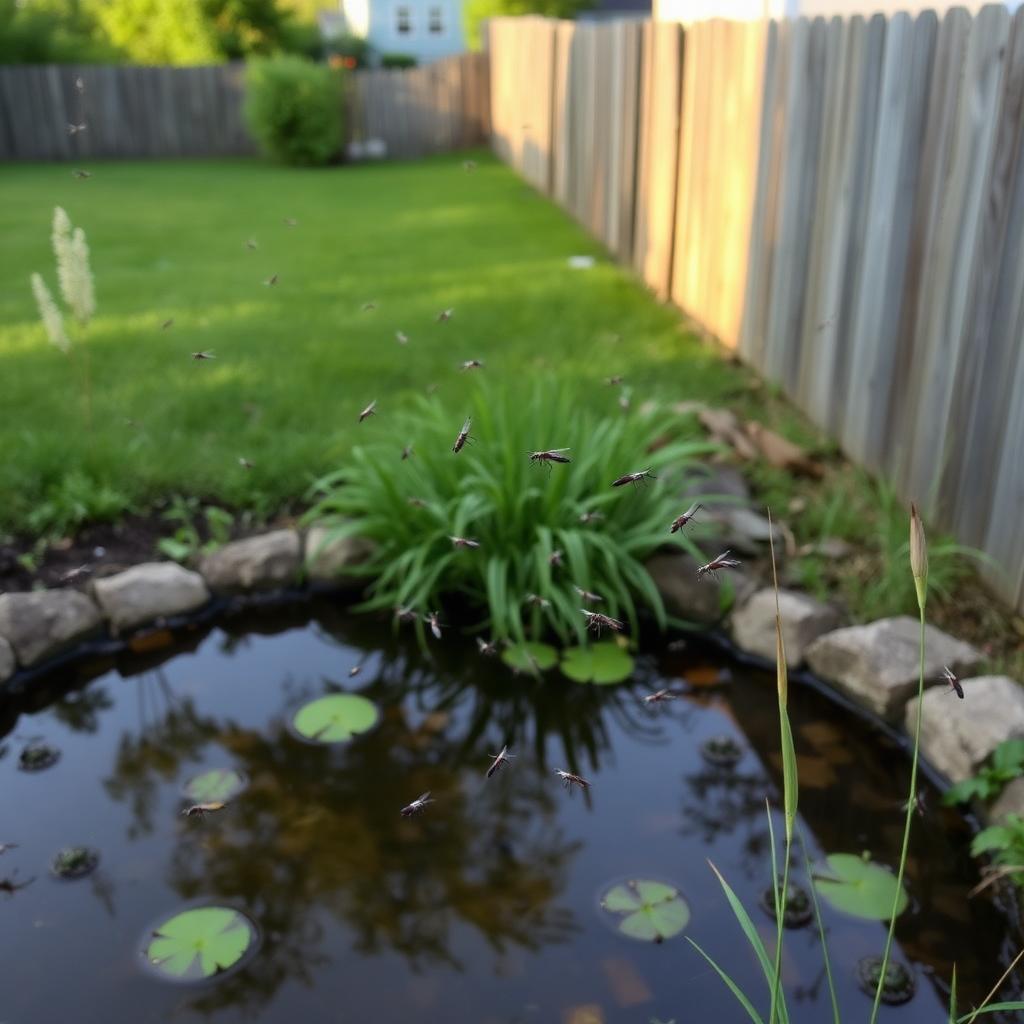
Mosquito season ramps up in late May across Illinois. Empty any container that holds water (kid pools, birdbaths, plant saucers, clogged gutters) once a week — the entire mosquito life cycle takes 7–10 days. A professional mosquito treatment knocks down adults and treats resting sites in shrubs and shaded yard edges.
Wasps and yellow jackets start scouting for nesting sites in early spring. Check eaves, soffits, attic vents, and underside of decks weekly. Knocking down a starter nest in April is trivial; removing a mature nest in August requires PPE and professional treatment.
When to call Sleep Tight
If you're seeing pest activity already, don't wait — populations multiply fast in spring weather. Sleep Tight offers same-day service across Chicago and the surrounding suburbs, including Evanston, Skokie, Oak Park, and Niles. Our spring perimeter treatment combines exclusion advice, a targeted exterior application, and a follow-up visit to keep ants, spiders, and rodents outside where they belong.
Why this matters for Chicago homes and apartments
Chicago's pest pressure is unusual for a major American city. The combination of a 100-year-plus housing stock, dense alley-based garbage collection, lake-effect humidity from May through September, and a freeze-thaw cycle that opens new foundation cracks every winter creates year-round opportunity for pests that would be seasonal almost anywhere else. Bed bugs and German cockroaches stay active inside heated buildings through January. Norway rats expand burrow networks under garages and gangways the moment ground temperatures crack 40°F. Mosquitoes breed in any standing water within a quarter-mile radius. The result is that the same pest problem in Chicago needs a different response than the playbook a national chain runs in a Sun Belt suburb.
That is why Sleep Tight built its service model around Chicago specifically: same-day appointment availability across all 77 community areas, licensed technicians who know the difference between a Greystone basement and a four-plus-one wall void, transparent flat-rate pricing instead of national-chain upsell scripts, and aftercare that accounts for shared-wall and shared-alley re-introduction risks.
What to do if you are seeing this problem right now
First, do not start spraying over-the-counter products. Foggers, bug bombs, and most consumer aerosols scatter the population deeper into wall voids, baseboards, and adjacent units, which makes the eventual professional treatment harder and more expensive. Second, document what you are seeing — photos of the pest, the location, droppings, damage, or bites — so a technician can confirm species and severity over the phone before the visit. Third, if you rent, notify your landlord or property manager in writing the same day; Chicago's Residential Landlord and Tenant Ordinance (RLTO) protects tenants who report infestations in good faith and obligates the landlord to coordinate professional treatment in nearly every case.
- Bag bedding, soft goods, and any items near the activity in sealed plastic — do not move them to another room.
- Keep sleeping in the affected room if bed bugs are suspected; moving rooms starts a second infestation.
- For rodents, do not seal up burrows or holes before treatment — exclusion happens after the population is knocked down.
- For mosquitoes, walk the perimeter and empty every container holding standing water; even a bottle cap can breed dozens.
- Call (773) 240-5932 for a same-day inspection — most Chicago neighborhoods can be on the schedule within four hours.
Related Sleep Tight resources
Sleep Tight Pest Control publishes a deep library of Chicago-specific guides covering bed bugs, rodents, cockroaches, mosquitoes, ants, and commercial pest control. Each guide is written by our technicians and reflects exactly what we see in the field across the city's neighborhoods.
- [Complete Chicago Pest Control Guide](/chicago-pest-control-guide) — neighborhood-by-neighborhood pest pressure overview.
- [Bed bug heat treatment](/services/bed-bug-heat-treatment) — one-day chemical-free bed bug elimination for Chicago apartments and homes.
- [Rodent control](/services/rodent-control) — exterior baiting, interior trapping, and exclusion for Chicago's rat and mouse pressure.
- [Emergency pest control](/services/emergency-pest-control) — same-day service for active infestations citywide.
- [Pest library](/pest-library) — searchable identification guide with photos for the 30+ pests common in Chicago.
Related Sleep Tight pages
Pest control in neighborhoods mentioned in this article
Frequently Asked Questions
When should I schedule my first pest treatment of the year?
Mid-March to early April is ideal in Illinois — before populations explode but after the ground thaws enough for products to bind properly.
Do I need ongoing service or just one treatment?
It depends on your property. A single perimeter treatment handles most single-family homes through early summer; properties backing up to forest preserves or with heavy landscaping benefit from quarterly service.
Is spring pest control safe for kids and pets?
Yes. Sleep Tight uses EPA-approved products applied to targeted areas; treated surfaces are safe for re-entry as soon as products dry, typically 30–60 minutes.
Need pest control in Chicago?
Sleep Tight Pest Control offers same-day service across all Chicago neighborhoods and suburbs including Evanston, Skokie, Niles, and Oak Park. Call (773) 240-5932 or get a free quote online.