Chicago mosquito season runs May through October, with peak activity from late June through August. Here's the month-by-month timeline and how to protect your yard.
If you've ever stepped onto a Chicago back porch in mid-July and been swarmed within thirty seconds, you already know the answer to 'when do mosquitoes come out in Chicago?' But the full picture is more nuanced — Chicago's mosquito season has a long shoulder on both ends, and the species mix changes as summer progresses. Here's the month-by-month breakdown for the 2026 season, what triggers activity, and how to keep your yard usable.
Chicago mosquito season — month by month
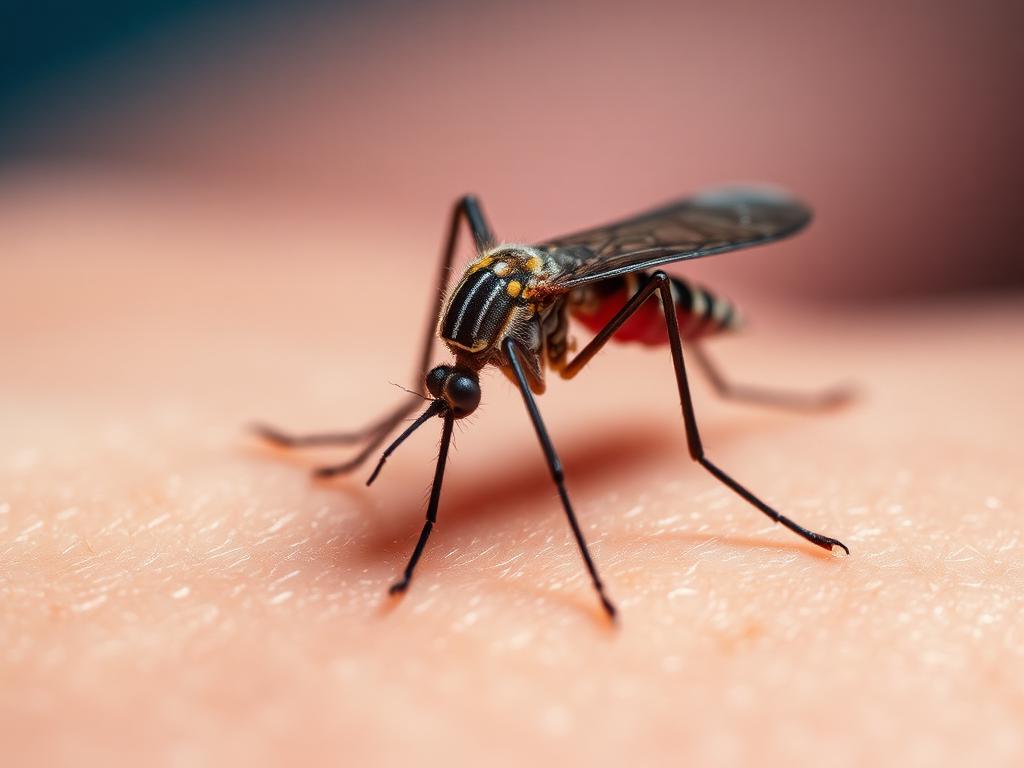
Mosquito activity in Chicago is driven primarily by temperature and standing water. Adult mosquitoes become active once nighttime lows consistently stay above 50°F and daytime highs hit the mid-60s. In a normal Chicago year, that means activity begins in early to mid-May, ramps up through June, peaks in July and August, tapers in September, and ends with the first hard frost in October.
- May: First adults emerge from overwintering and from snowmelt pools. Low pressure, mostly evening biting.
- June: Activity climbs fast. By mid-month most yards have noticeable populations, especially near standing water.
- July: Peak season begins. Aedes and Culex species are both active. Daytime biting in shaded areas.
- August: Highest pressure of the year. West Nile virus risk peaks in late August in Cook County.
- September: Populations decline but biting continues, especially on warm evenings.
- October: First frost ends the season. Some activity possible during warm spells before the freeze.
Why temperature drives mosquito activity
Mosquitoes are cold-blooded. Below 50°F they slow dramatically; below 40°F most adults die off and the rest enter overwintering shelter (basements, garages, hollow trees). Above 80°F populations explode because larval development happens faster — eggs can hatch and produce biting adults in as little as 7 days during a Chicago heat wave.
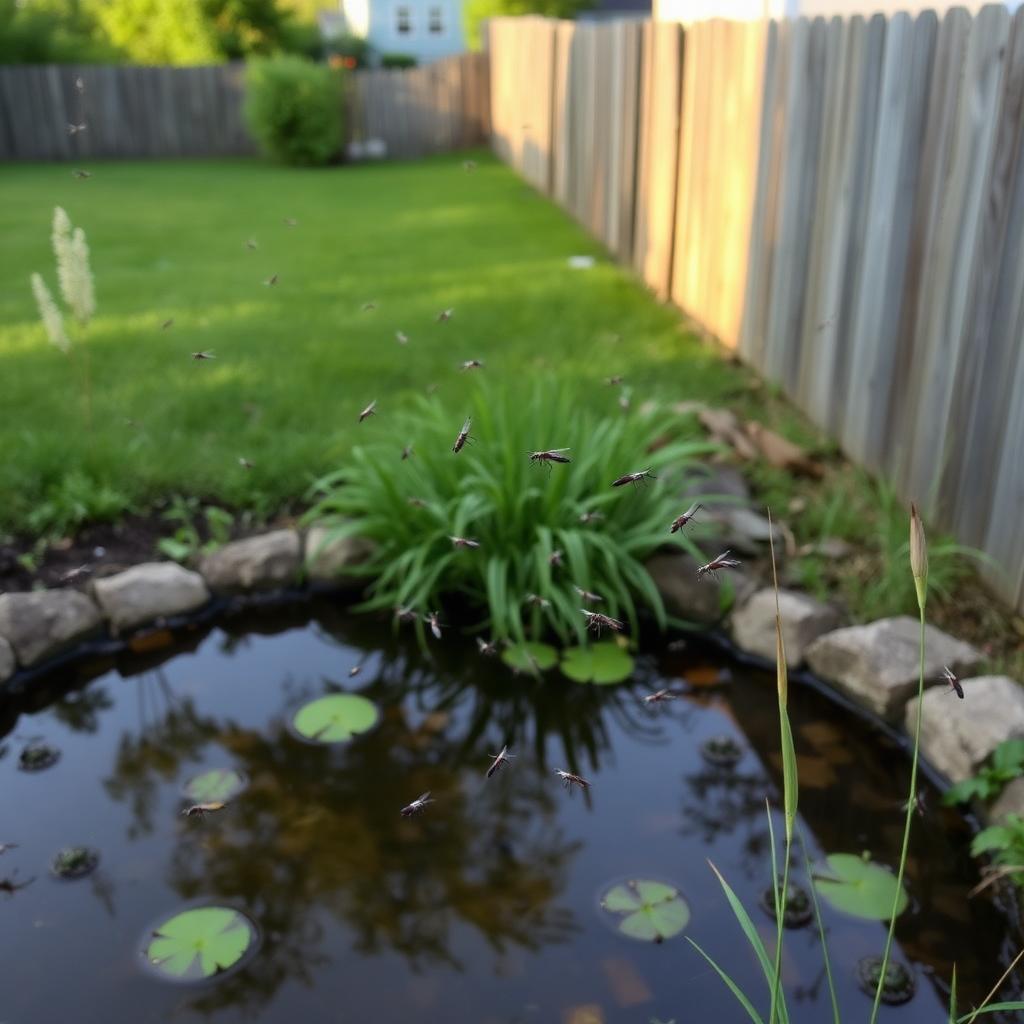
The other variable is rainfall. A heavy thunderstorm followed by a few warm days creates ideal breeding conditions. Anything that holds standing water for more than four days — clogged gutters, kiddie pools, birdbaths, tarp folds, plant saucers, tire ruts — becomes a breeding site.
Why lakefront and park-adjacent Chicago neighborhoods see more mosquitoes
If you live in Edgewater, Rogers Park, Hyde Park, or anywhere within a few blocks of the lakefront or a major park (Lincoln Park, Humboldt Park, Washington Park, Marquette Park), you'll see higher mosquito pressure than someone living in a dense interior neighborhood. Lagoons, drainage swales, and large turf areas all hold water and provide adult resting habitat. Morgan Park, with the Dan Ryan Woods nearby, sees some of the heaviest summer pressure in the city.
Forested suburbs north and west of the city — Evanston, Skokie, Wilmette, Park Ridge, Oak Park — face the same dynamic from mature canopy cover and Cook County Forest Preserve adjacency.
How Sleep Tight's mosquito barrier treatment works
Our barrier program targets adult mosquitoes where they rest during the day — the underside of leaves, fence lines, shrub interiors, and shaded structural surfaces. A single application typically reduces yard populations by 85-90% for 21-30 days. For full-season coverage we recommend a seasonal program: applications every 21 days from May through October, with a free retreatment if pressure spikes between visits.
We also offer one-time event treatments timed 24-48 hours before a graduation party, wedding, or backyard cookout. For tick-and-mosquito combo properties, we treat the perimeter brush line separately. Every program includes a free yard inspection to identify and eliminate breeding sites the homeowner may have missed.
Need pest control in Chicago or the surrounding suburbs?
Sleep Tight Pest Control offers same-day service citywide. Call (773) 240-5932 or get a free quote online at sleeptightpestcontrol.com.
Why this matters for Chicago homes and apartments
Chicago's pest pressure is unusual for a major American city. The combination of a 100-year-plus housing stock, dense alley-based garbage collection, lake-effect humidity from May through September, and a freeze-thaw cycle that opens new foundation cracks every winter creates year-round opportunity for pests that would be seasonal almost anywhere else. Bed bugs and German cockroaches stay active inside heated buildings through January. Norway rats expand burrow networks under garages and gangways the moment ground temperatures crack 40°F. Mosquitoes breed in any standing water within a quarter-mile radius. The result is that the same pest problem in Chicago needs a different response than the playbook a national chain runs in a Sun Belt suburb.
That is why Sleep Tight built its service model around Chicago specifically: same-day appointment availability across all 77 community areas, licensed technicians who know the difference between a Greystone basement and a four-plus-one wall void, transparent flat-rate pricing instead of national-chain upsell scripts, and aftercare that accounts for shared-wall and shared-alley re-introduction risks.
What to do if you are seeing this problem right now
First, do not start spraying over-the-counter products. Foggers, bug bombs, and most consumer aerosols scatter the population deeper into wall voids, baseboards, and adjacent units, which makes the eventual professional treatment harder and more expensive. Second, document what you are seeing — photos of the pest, the location, droppings, damage, or bites — so a technician can confirm species and severity over the phone before the visit. Third, if you rent, notify your landlord or property manager in writing the same day; Chicago's Residential Landlord and Tenant Ordinance (RLTO) protects tenants who report infestations in good faith and obligates the landlord to coordinate professional treatment in nearly every case.
- Bag bedding, soft goods, and any items near the activity in sealed plastic — do not move them to another room.
- Keep sleeping in the affected room if bed bugs are suspected; moving rooms starts a second infestation.
- For rodents, do not seal up burrows or holes before treatment — exclusion happens after the population is knocked down.
- For mosquitoes, walk the perimeter and empty every container holding standing water; even a bottle cap can breed dozens.
- Call (773) 240-5932 for a same-day inspection — most Chicago neighborhoods can be on the schedule within four hours.
Related Sleep Tight resources
Sleep Tight Pest Control publishes a deep library of Chicago-specific guides covering bed bugs, rodents, cockroaches, mosquitoes, ants, and commercial pest control. Each guide is written by our technicians and reflects exactly what we see in the field across the city's neighborhoods.
- [Complete Chicago Pest Control Guide](/chicago-pest-control-guide) — neighborhood-by-neighborhood pest pressure overview.
- [Bed bug heat treatment](/services/bed-bug-heat-treatment) — one-day chemical-free bed bug elimination for Chicago apartments and homes.
- [Rodent control](/services/rodent-control) — exterior baiting, interior trapping, and exclusion for Chicago's rat and mouse pressure.
- [Emergency pest control](/services/emergency-pest-control) — same-day service for active infestations citywide.
- [Pest library](/pest-library) — searchable identification guide with photos for the 30+ pests common in Chicago.
Related Sleep Tight pages
Pest control in neighborhoods mentioned in this article
Frequently Asked Questions
What month do mosquitoes come out in Chicago?
Adult mosquitoes typically emerge in early to mid-May once nighttime temperatures stay above 50°F. Light activity through May, heavy activity June through August, tapering in September, and ending at the first hard frost in October.
When is mosquito season worst in Chicago?
Late June through August is peak season. July and August are typically the heaviest months, with West Nile virus risk in Cook County peaking in late August.
Why do I have so many mosquitoes in my Chicago yard?
Standing water within 100 yards of your home (gutters, plant saucers, tarps, birdbaths) and shaded resting habitat (dense shrubs, fence lines) are the two biggest drivers. Lakefront and park-adjacent properties face additional pressure from nearby breeding sites.
How fast can Sleep Tight treat my Chicago yard for mosquitoes?
Same-day mosquito barrier treatment is available throughout Chicago and the surrounding suburbs. Call (773) 240-5932 before noon for same-day appointment availability.
Need pest control in Chicago?
Sleep Tight Pest Control offers same-day service across all Chicago neighborhoods and suburbs including Evanston, Skokie, Niles, and Oak Park. Call (773) 240-5932 or get a free quote online.