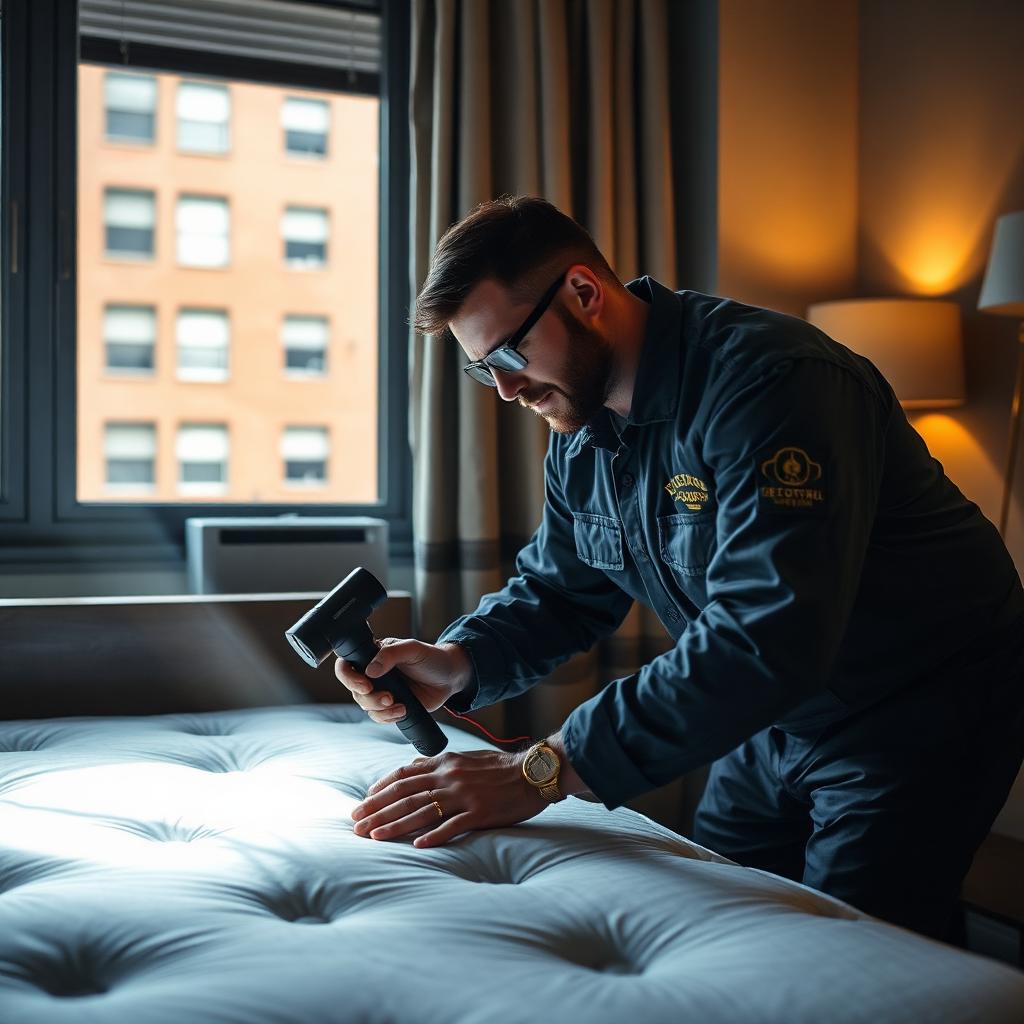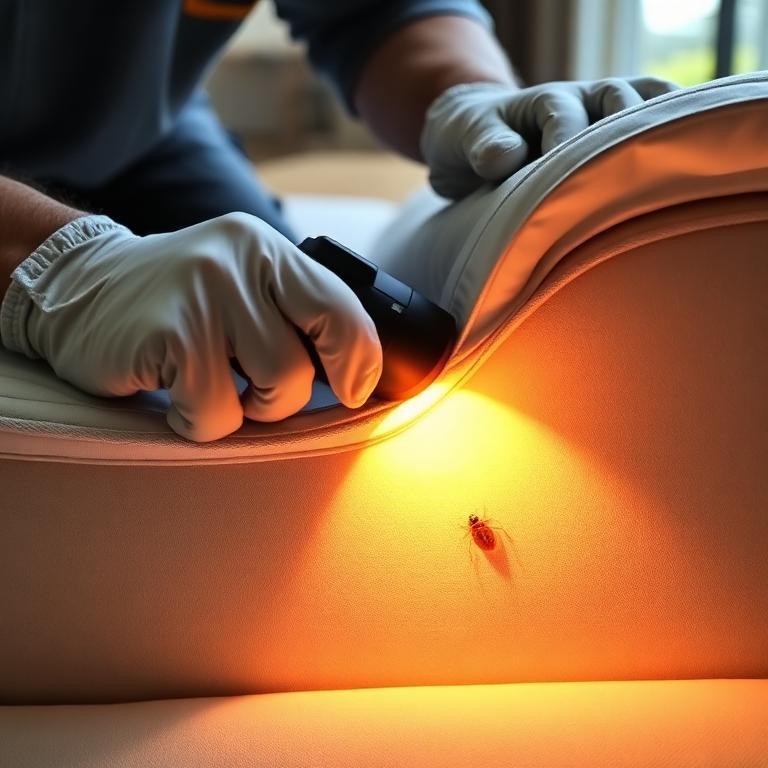
A detailed Chicago-specific identification guide for spotting bed bugs early: bites, fecal spots, shed skins, live bugs, and the hiding places Chicago apartments and condos see most.
Bed bugs are one of the few pests that almost always leave evidence days or weeks before you actually see one. Catching them in that early window is the difference between a single-room treatment and a whole-building outbreak — especially in Chicago's dense apartment stock.
This guide is the full identification checklist Sleep Tight's Chicago technicians use in the field. Use it room by room before assuming you have something else.
1. Bites in lines or tight clusters
Bed bug bites appear in straight lines or tight clusters of three to five welts, almost always on skin exposed during sleep — arms, shoulders, neck, ankles, upper back. Mosquito and flea bites are scattered and random. If multiple people in the household wake up with the same pattern in the same place each morning, treat it as bed bugs until proven otherwise.
Important caveat: roughly 30% of adults have no reaction to bed bug bites at all. The absence of bites does not mean the absence of bed bugs.
2. Rust-colored smears on sheets and pillowcases
When you roll over in your sleep, you can crush a bed bug that has just fed. The result is a small reddish-brown smear on the fitted sheet, pillowcase, or duvet cover — usually in the area where your torso rests. Strip the bed and check the middle third of the mattress first.
3. Dark pepper-like fecal spots
Bed bug droppings look like fine black pepper or tiny ballpoint-pen dots. Unlike crushed bugs, fecal spots cluster — you will see groups of 5 to 30 dots in specific locations:
- Mattress seams, especially along the top and side piping.
- Box-spring corners and the underside of the box-spring fabric.
- Headboard joints, screw holes, and the back side of attached headboards.
- Baseboards along shared walls (critical in Chicago 4+1s and high-rises).
- Behind nightstands, picture frames, and electrical outlet covers.
4. Translucent shed skins
Bed bugs molt five times before reaching adulthood, leaving behind a translucent, amber-colored exoskeleton each time. Shed skins pile up in the same hiding spots as the bugs — under the mattress label, in box-spring corners, in the seams of upholstered chairs, in dresser joinery. Finding shed skins means a breeding population, not a single hitchhiker.
5. Live bugs (and what they actually look like)
Adult bed bugs are about the size and shape of an apple seed — roughly 5–7 mm long, flat, oval, reddish-brown. After feeding they swell and darken to a deeper red. Nymphs are smaller and translucent until they feed. Eggs are pinhead-sized, pearly white, and glued to surfaces in tight clusters.
Bed bugs are commonly mistaken in Chicago for carpet beetles (smaller, rounder, patterned), bat bugs (visually nearly identical — a microscope confirms), and German cockroach nymphs (faster, with long antennae).
6. A sweet, musty odor
Heavier infestations give off a distinct sweet, musty smell — often compared to overripe raspberries, wet towels, or moldy laundry. If you notice the odor near the bed or in a closet, the population is already substantial and should be treated immediately.
Where to look first in a Chicago apartment
Bed bugs hide within a 5–8 foot radius of where their host sleeps. In a Chicago apartment, work outward from the bed in this order:
- Mattress seams, then box-spring corners, then headboard.
- Nightstand drawer joints and the underside of the drawer.
- Baseboards along the wall behind the headboard — especially if it is a shared wall.
- Electrical outlet covers along shared walls (a major Chicago multi-unit pathway).
- Upholstered chair seams within 8 feet of the bed.
- Curtain hems and the back side of wall-hung picture frames.
What to do the moment you find signs
Do not move rooms, do not move furniture to the alley, do not buy a fogger. If you rent, notify your landlord in writing the same day (Chicago's RLTO requires them to coordinate treatment in nearly every case). Then book a free professional inspection to confirm species and severity. Sleep Tight offers same-day Chicago inspections and gives written quotes on the spot.
For the full elimination playbook, see [how to get rid of bed bugs in a Chicago apartment](/blog/how-to-get-rid-of-bed-bugs-chicago). For pricing, see our [2026 Chicago bed bug treatment cost guide](/blog/bed-bug-treatment-cost-chicago).
Why this matters for Chicago homes and apartments
Chicago's pest pressure is unusual for a major American city. The combination of a 100-year-plus housing stock, dense alley-based garbage collection, lake-effect humidity from May through September, and a freeze-thaw cycle that opens new foundation cracks every winter creates year-round opportunity for pests that would be seasonal almost anywhere else. Bed bugs and German cockroaches stay active inside heated buildings through January. Norway rats expand burrow networks under garages and gangways the moment ground temperatures crack 40°F. Mosquitoes breed in any standing water within a quarter-mile radius. The result is that the same pest problem in Chicago needs a different response than the playbook a national chain runs in a Sun Belt suburb.
That is why Sleep Tight built its service model around Chicago specifically: same-day appointment availability across all 77 community areas, licensed technicians who know the difference between a Greystone basement and a four-plus-one wall void, transparent flat-rate pricing instead of national-chain upsell scripts, and aftercare that accounts for shared-wall and shared-alley re-introduction risks.
What to do if you are seeing this problem right now
First, do not start spraying over-the-counter products. Foggers, bug bombs, and most consumer aerosols scatter the population deeper into wall voids, baseboards, and adjacent units, which makes the eventual professional treatment harder and more expensive. Second, document what you are seeing — photos of the pest, the location, droppings, damage, or bites — so a technician can confirm species and severity over the phone before the visit. Third, if you rent, notify your landlord or property manager in writing the same day; Chicago's Residential Landlord and Tenant Ordinance (RLTO) protects tenants who report infestations in good faith and obligates the landlord to coordinate professional treatment in nearly every case.
- Bag bedding, soft goods, and any items near the activity in sealed plastic — do not move them to another room.
- Keep sleeping in the affected room if bed bugs are suspected; moving rooms starts a second infestation.
- For rodents, do not seal up burrows or holes before treatment — exclusion happens after the population is knocked down.
- For mosquitoes, walk the perimeter and empty every container holding standing water; even a bottle cap can breed dozens.
- Call (773) 240-5932 for a same-day inspection — most Chicago neighborhoods can be on the schedule within four hours.
Related Sleep Tight resources
Sleep Tight Pest Control publishes a deep library of Chicago-specific guides covering bed bugs, rodents, cockroaches, mosquitoes, ants, and commercial pest control. Each guide is written by our technicians and reflects exactly what we see in the field across the city's neighborhoods.
- [Complete Chicago Pest Control Guide](/chicago-pest-control-guide) — neighborhood-by-neighborhood pest pressure overview.
- [Bed bug heat treatment](/services/bed-bug-heat-treatment) — one-day chemical-free bed bug elimination for Chicago apartments and homes.
- [Rodent control](/services/rodent-control) — exterior baiting, interior trapping, and exclusion for Chicago's rat and mouse pressure.
- [Emergency pest control](/services/emergency-pest-control) — same-day service for active infestations citywide.
- [Pest library](/pest-library) — searchable identification guide with photos for the 30+ pests common in Chicago.
Related Sleep Tight pages
Frequently Asked Questions
What do bed bug bites look like in Chicago apartments?
Straight lines or tight clusters of three to five welts on exposed skin — usually arms, shoulders, neck, or ankles. About 30% of adults have no visible reaction, so absence of bites does not rule out bed bugs.
Are the small bugs I'm finding bed bugs or carpet beetles?
Carpet beetles are smaller (under 3 mm), rounder, and patterned (often mottled brown and white). Bed bugs are apple-seed shaped, 5–7 mm, flat, and a uniform reddish-brown. A free inspection confirms species in five minutes.
Can I have bed bugs without seeing any live bugs?
Yes, especially early on. Fecal spots, shed skins, and rust-colored sheet stains usually appear well before live bug sightings. Treat any of those as confirmation and book an inspection.
Do clean apartments get bed bugs in Chicago?
Yes. Bed bugs are introduced by hitchhiking on bags, clothes, and used furniture — not by dirt. Chicago's #1 driver is shared-wall and shared-pathway transfer in multi-unit buildings.
Need pest control in Chicago?
Sleep Tight Pest Control offers same-day service across all Chicago neighborhoods and suburbs including Evanston, Skokie, Niles, and Oak Park. Call (773) 240-5932 or get a free quote online.