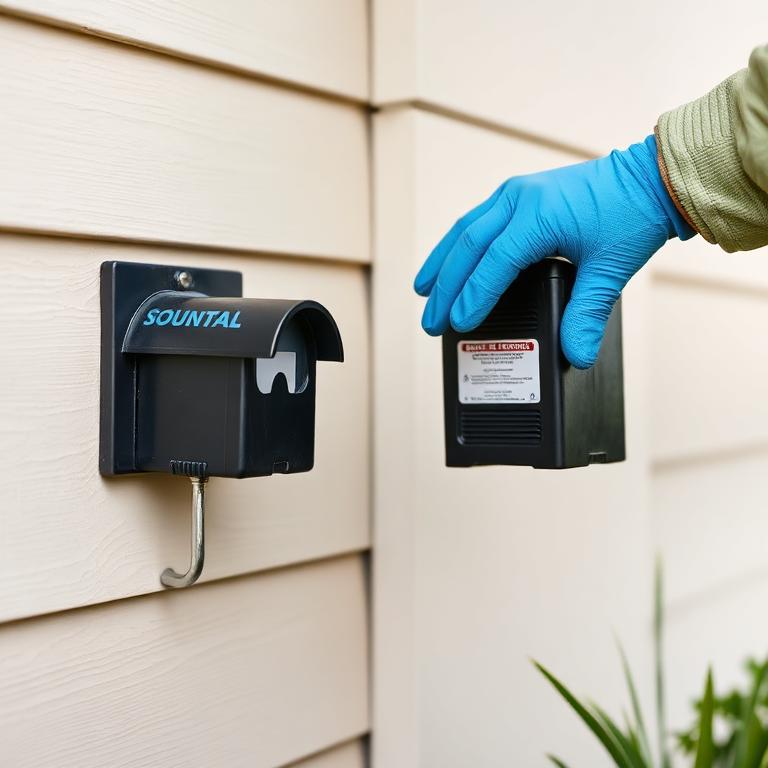
Mice can enter a Chicago home through a gap the size of a dime. Here's the prevention checklist and why exclusion work usually requires a professional.
House mice and Norway rats are the two rodents that drive virtually every rodent call we get in Chicago. Both are commensal — they evolved alongside humans and depend on our buildings, food, and waste streams. And both can enter your home through openings that look impossibly small. A house mouse only needs a quarter-inch gap. A juvenile Norway rat needs a half-inch. Effective prevention is mostly about finding and closing those openings before fall.
How mice enter Chicago homes through dime-sized gaps
Mice are not chewing their way into your house — they're walking in through gaps that already exist. Common entry points in Chicago's vintage housing stock include the space around utility line penetrations (gas, water, electrical, cable), gaps under garage doors, deteriorated mortar joints at the foundation, basement window frames and wells, dryer vent flashing, attic gable vents, and the air gap above bay window soffits.
Rats use the same kinds of openings but slightly larger ones, plus burrow access under stoops and porches that breaks into the basement or crawl space. Once a rodent has used an entry point successfully, it leaves pheromone trails that draw more rodents to the same location.
Fall prevention timing — why August and September matter
Mice and rats start moving indoors when nighttime temperatures consistently drop below 50°F — typically late September in Chicago, but the migration begins earlier in suburbs with mature tree cover. The optimal window for rodent-proofing your home is August through mid-September. Exclusion work done in summer keeps the next wave out; exclusion done in November is fighting a fire that's already inside.
If you had rodents last winter and didn't seal the entry points, you'll have them again this winter. That's the most common rodent call pattern in Chicago — a homeowner who knocked down the infestation in February and assumed the problem was over.
Exclusion materials that work — and ones that don't
Materials that mice and rats cannot chew through: hardware cloth (1/4-inch mesh), copper mesh, sheet metal, mortar, concrete patching compound, and quality polyurethane sealants reinforced with mesh. Materials that work for filling visible gaps and look good cosmetically include foam-backed weatherstripping for door sweeps and brush-strip seals for garage doors.
Materials that absolutely do not work: spray foam by itself (rodents chew through it in hours), steel wool by itself (rusts and fails in 6-12 months — use copper mesh instead), caulk by itself, plastic vent covers, and old t-shirts or rags. We re-do dozens of failed DIY exclusion jobs in Chicago every year that used spray foam alone.
DIY prevention checklist for Chicago homes
Walk the exterior of your home in August with a flashlight and a notebook. Mark every gap larger than a quarter-inch — utility penetrations, foundation cracks, missing mortar, vents without proper screening, gaps under siding, daylight visible under doors. Inside the basement, look for daylight at the rim joist, gaps where pipes enter walls, and openings around the electrical panel where the service cable enters.
Trim tree branches and shrubs back 3 feet from the structure. Move firewood, mulch piles, and yard debris at least 20 feet from the foundation. Put bird feeders on poles with squirrel/rat guards, or remove them entirely. Secure garbage cans with locking lids. Pick up fallen fruit from yard trees within 24 hours.
When exclusion requires a professional and Sleep Tight's full service
Call a professional when you've found more entry points than you can comfortably seal, when the gaps are in hard-to-reach areas (high gable vents, roof penetrations, attic eaves), when you have an active infestation that needs trapping concurrent with sealing, or when you want a warranted job. Sleep Tight's rodent exclusion service includes a full property inspection, a written sealing plan, exclusion work using copper mesh and hardware cloth, knockdown traps and locked bait stations for active populations, and follow-up monitoring at 14 and 30 days. Most jobs include a warranty.
Need pest control in Chicago or the surrounding suburbs? Sleep Tight Pest Control offers same-day service citywide. Call (773) 240-5932 or get a free quote online at sleeptightpestcontrol.com.
Why this matters for Chicago homes and apartments
Chicago's pest pressure is unusual for a major American city. The combination of a 100-year-plus housing stock, dense alley-based garbage collection, lake-effect humidity from May through September, and a freeze-thaw cycle that opens new foundation cracks every winter creates year-round opportunity for pests that would be seasonal almost anywhere else. Bed bugs and German cockroaches stay active inside heated buildings through January. Norway rats expand burrow networks under garages and gangways the moment ground temperatures crack 40°F. Mosquitoes breed in any standing water within a quarter-mile radius. The result is that the same pest problem in Chicago needs a different response than the playbook a national chain runs in a Sun Belt suburb.
That is why Sleep Tight built its service model around Chicago specifically: same-day appointment availability across all 77 community areas, licensed technicians who know the difference between a Greystone basement and a four-plus-one wall void, transparent flat-rate pricing instead of national-chain upsell scripts, and aftercare that accounts for shared-wall and shared-alley re-introduction risks.
What to do if you are seeing this problem right now
First, do not start spraying over-the-counter products. Foggers, bug bombs, and most consumer aerosols scatter the population deeper into wall voids, baseboards, and adjacent units, which makes the eventual professional treatment harder and more expensive. Second, document what you are seeing — photos of the pest, the location, droppings, damage, or bites — so a technician can confirm species and severity over the phone before the visit. Third, if you rent, notify your landlord or property manager in writing the same day; Chicago's Residential Landlord and Tenant Ordinance (RLTO) protects tenants who report infestations in good faith and obligates the landlord to coordinate professional treatment in nearly every case.
- Bag bedding, soft goods, and any items near the activity in sealed plastic — do not move them to another room.
- Keep sleeping in the affected room if bed bugs are suspected; moving rooms starts a second infestation.
- For rodents, do not seal up burrows or holes before treatment — exclusion happens after the population is knocked down.
- For mosquitoes, walk the perimeter and empty every container holding standing water; even a bottle cap can breed dozens.
- Call (773) 240-5932 for a same-day inspection — most Chicago neighborhoods can be on the schedule within four hours.
Related Sleep Tight resources
Sleep Tight Pest Control publishes a deep library of Chicago-specific guides covering bed bugs, rodents, cockroaches, mosquitoes, ants, and commercial pest control. Each guide is written by our technicians and reflects exactly what we see in the field across the city's neighborhoods.
- [Complete Chicago Pest Control Guide](/chicago-pest-control-guide) — neighborhood-by-neighborhood pest pressure overview.
- [Bed bug heat treatment](/services/bed-bug-heat-treatment) — one-day chemical-free bed bug elimination for Chicago apartments and homes.
- [Rodent control](/services/rodent-control) — exterior baiting, interior trapping, and exclusion for Chicago's rat and mouse pressure.
- [Emergency pest control](/services/emergency-pest-control) — same-day service for active infestations citywide.
- [Pest library](/pest-library) — searchable identification guide with photos for the 30+ pests common in Chicago.
Related Sleep Tight pages
Frequently Asked Questions
What size gap can mice fit through in a Chicago home?
A house mouse only needs a quarter-inch opening — about the diameter of a dime. Juvenile Norway rats need about a half-inch.
When should I rodent-proof my Chicago home?
August through mid-September. That's the window before fall migration begins. Exclusion done after rodents are already inside is much more expensive and less reliable.
Does spray foam keep mice out?
No. Mice chew through spray foam in hours. Use hardware cloth, copper mesh, or sheet metal as the structural barrier and apply sealant or mortar around it.
Does Sleep Tight's rodent exclusion come with a warranty?
Yes. Most rodent exclusion jobs include a warranty on the sealed entry points. Call (773) 240-5932 for specifics on your property.
Need pest control in Chicago?
Sleep Tight Pest Control offers same-day service across all Chicago neighborhoods and suburbs including Evanston, Skokie, Niles, and Oak Park. Call (773) 240-5932 or get a free quote online.