German cockroaches reproduce faster than any other Chicago pest, trigger asthma in children, and routinely survive over-the-counter treatments. Here's what actually works.
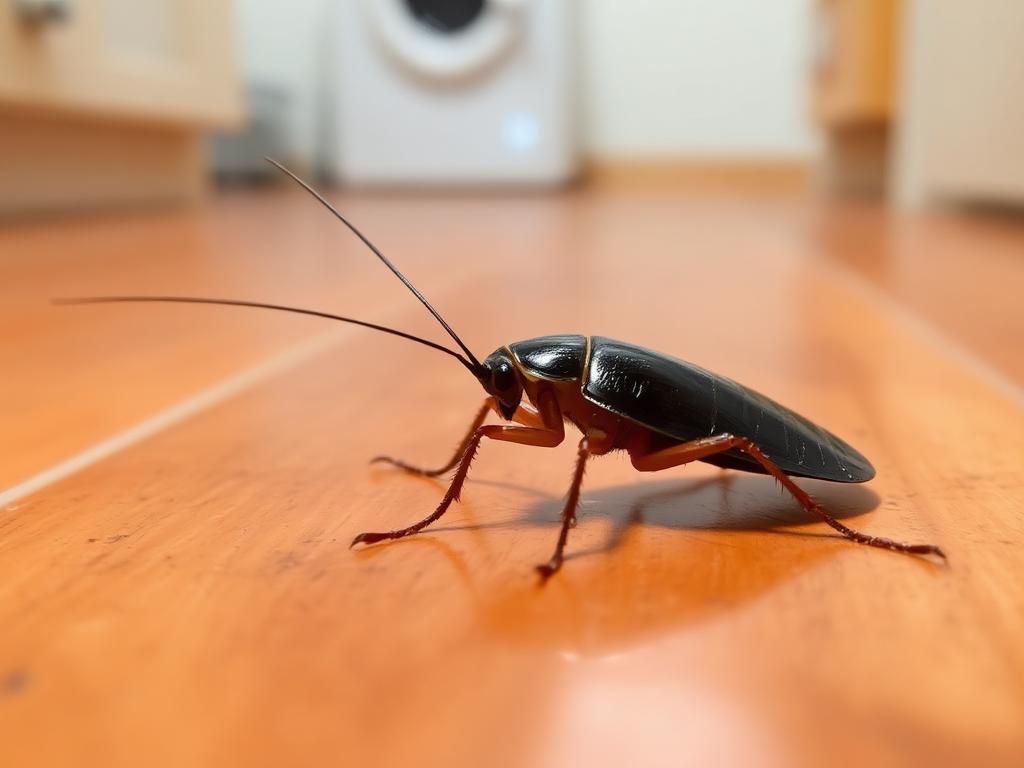
German cockroaches (Blattella germanica) are the small light-brown cockroaches Chicago renters find under kitchen sinks, behind refrigerators, and in dishwasher gaskets. They are by a wide margin the most common indoor cockroach in Chicago and the most damaging — both to public health and to apartment building reputations. Here's why they're so hard to eliminate and what a professional protocol does that retail products can't.
Why German cockroaches reproduce faster than any other roach
A single female German cockroach produces an egg case (ootheca) containing 30-48 eggs roughly every 3-4 weeks, and she carries it attached to her abdomen until just before hatching — which protects it from most contact insecticides. Nymphs reach reproductive maturity in 6-8 weeks. The compound math is brutal: starting with a single mated female, an untreated population can exceed 10,000 individuals within 12 months.
Most other cockroaches in Chicago (American, Oriental) live primarily outdoors or in basements and breed much more slowly. German cockroaches live exclusively indoors in close association with people, which is why apartments and restaurants are their stronghold.
Health risks including asthma triggers
German cockroach allergens (proteins from saliva, feces, and shed cuticles) are one of the most significant indoor asthma triggers identified in pediatric research, especially for children in dense urban housing. Chicago's National Cooperative Inner-City Asthma Study identified cockroach allergen exposure as a strong predictor of asthma severity in city kids. They also mechanically transfer salmonella, E. coli, and other pathogens onto food prep surfaces.
For families with asthmatic children, German cockroach elimination isn't a cosmetic issue — it measurably improves health outcomes.
Why they survive DIY treatments
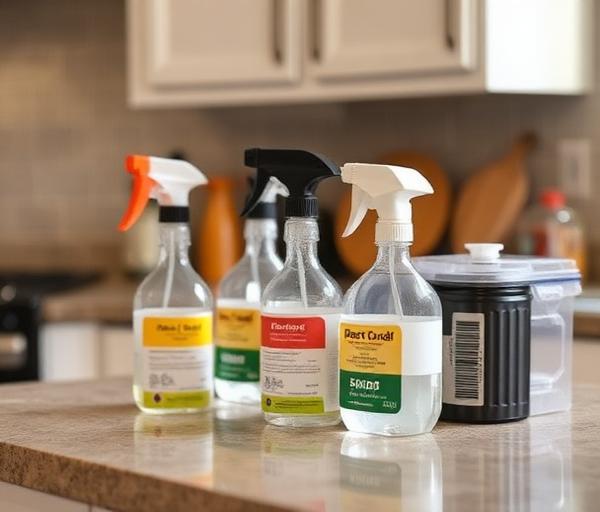
Three reasons retail products usually fail on German cockroaches. First, populations have widespread resistance to pyrethroid insecticides — the active ingredient in most hardware store sprays. Second, females shield egg cases physically, so even effective contact kills don't reach the next generation. Third, cockroaches harbor in tight protected voids (inside motor housings, behind dishwasher panels, in the hollow tubing of metal shelving) where surface sprays never penetrate.
Spraying around the kitchen feels productive but typically just disperses the population into wall voids and adjacent units in apartment buildings — making the problem worse, not better.
What professional gel bait does that retail products can't
Modern professional German cockroach control is built around precisely-placed gel bait formulations the cockroaches carry back into harborage and feed to nymphs and other adults. The active ingredients are non-repellent — cockroaches don't avoid treated surfaces — which is the opposite of how retail sprays work. Combined with an insect growth regulator that prevents nymphs from developing into reproductive adults, gel bait protocols reliably collapse populations in 4-6 weeks even in severe infestations.
Application matters as much as product. A professional technician places small pea-sized dots at dozens of specific harborage points the homeowner can't see or reach — appliance motor compartments, under-cabinet voids, hinge channels, behind switch plates, inside hollow door frames.
How Sleep Tight's cockroach protocol works in Chicago apartments
Our German cockroach service starts with a thorough inspection using glue monitors to confirm activity locations and severity. We apply professional gel baits at all identified harborage points, dust inaccessible voids with a non-repellent insecticide dust, install IGR stations to break the reproductive cycle, and place follow-up monitors. For apartment buildings we strongly recommend treating adjacent units to prevent reinvasion through shared walls.
We schedule a follow-up visit at 14-21 days to verify monitor results, re-bait any active areas, and confirm the population is on track to collapse. Most jobs are fully eliminated by week 6. Need pest control in Chicago or the surrounding suburbs? Sleep Tight Pest Control offers same-day service citywide. Call (773) 240-5932 or get a free quote online at sleeptightpestcontrol.com.
Why this matters for Chicago homes and apartments
Chicago's pest pressure is unusual for a major American city. The combination of a 100-year-plus housing stock, dense alley-based garbage collection, lake-effect humidity from May through September, and a freeze-thaw cycle that opens new foundation cracks every winter creates year-round opportunity for pests that would be seasonal almost anywhere else. Bed bugs and German cockroaches stay active inside heated buildings through January. Norway rats expand burrow networks under garages and gangways the moment ground temperatures crack 40°F. Mosquitoes breed in any standing water within a quarter-mile radius. The result is that the same pest problem in Chicago needs a different response than the playbook a national chain runs in a Sun Belt suburb.
That is why Sleep Tight built its service model around Chicago specifically: same-day appointment availability across all 77 community areas, licensed technicians who know the difference between a Greystone basement and a four-plus-one wall void, transparent flat-rate pricing instead of national-chain upsell scripts, and aftercare that accounts for shared-wall and shared-alley re-introduction risks.
What to do if you are seeing this problem right now
First, do not start spraying over-the-counter products. Foggers, bug bombs, and most consumer aerosols scatter the population deeper into wall voids, baseboards, and adjacent units, which makes the eventual professional treatment harder and more expensive. Second, document what you are seeing — photos of the pest, the location, droppings, damage, or bites — so a technician can confirm species and severity over the phone before the visit. Third, if you rent, notify your landlord or property manager in writing the same day; Chicago's Residential Landlord and Tenant Ordinance (RLTO) protects tenants who report infestations in good faith and obligates the landlord to coordinate professional treatment in nearly every case.
- Bag bedding, soft goods, and any items near the activity in sealed plastic — do not move them to another room.
- Keep sleeping in the affected room if bed bugs are suspected; moving rooms starts a second infestation.
- For rodents, do not seal up burrows or holes before treatment — exclusion happens after the population is knocked down.
- For mosquitoes, walk the perimeter and empty every container holding standing water; even a bottle cap can breed dozens.
- Call (773) 240-5932 for a same-day inspection — most Chicago neighborhoods can be on the schedule within four hours.
Related Sleep Tight resources
Sleep Tight Pest Control publishes a deep library of Chicago-specific guides covering bed bugs, rodents, cockroaches, mosquitoes, ants, and commercial pest control. Each guide is written by our technicians and reflects exactly what we see in the field across the city's neighborhoods.
- [Complete Chicago Pest Control Guide](/chicago-pest-control-guide) — neighborhood-by-neighborhood pest pressure overview.
- [Bed bug heat treatment](/services/bed-bug-heat-treatment) — one-day chemical-free bed bug elimination for Chicago apartments and homes.
- [Rodent control](/services/rodent-control) — exterior baiting, interior trapping, and exclusion for Chicago's rat and mouse pressure.
- [Emergency pest control](/services/emergency-pest-control) — same-day service for active infestations citywide.
- [Pest library](/pest-library) — searchable identification guide with photos for the 30+ pests common in Chicago.
Related Sleep Tight pages
Frequently Asked Questions
How fast do German cockroaches reproduce in Chicago apartments?
Females produce 30-48 eggs every 3-4 weeks, and nymphs reach reproductive maturity in 6-8 weeks. A single mated female can produce a population exceeding 10,000 in 12 months if untreated.
Why don't store-bought sprays kill German cockroaches?
Three reasons: widespread pyrethroid resistance, females physically shield egg cases from contact kills, and cockroaches live in tight voids where surface sprays don't reach. Sprays often disperse the population into walls instead of eliminating it.
Are German cockroaches a health risk for Chicago kids?
Yes. Cockroach allergens are one of the most significant indoor asthma triggers identified in pediatric research. Eliminating them measurably improves asthma outcomes for affected children.
How long does it take Sleep Tight to eliminate German cockroaches?
Most jobs are fully eliminated by week 6 using professional gel baits and an insect growth regulator, with a follow-up visit at 14-21 days. Same-day initial treatment is available.
Need pest control in Chicago?
Sleep Tight Pest Control offers same-day service across all Chicago neighborhoods and suburbs including Evanston, Skokie, Niles, and Oak Park. Call (773) 240-5932 or get a free quote online.